
Choose the floor for the water and the heat, not the brochure.
The floor for hot wash, cold shock, and forklifts on a wet slab. Not the floor for every room.
Request a floor assessment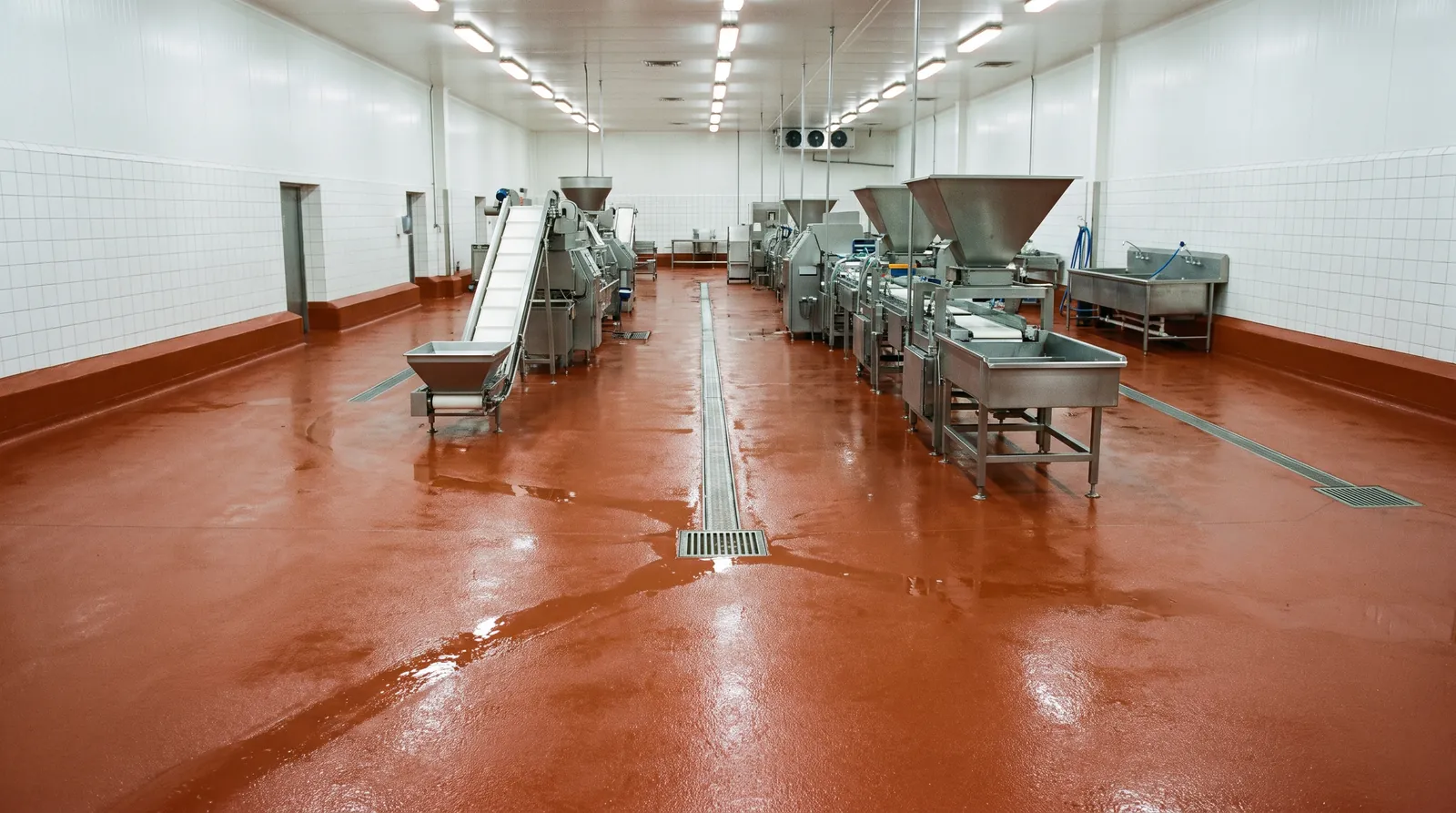
Choose the exposure, then the resin.
Urethane cement is a thick floor mixed with cement and aggregate. We specify it when a commercial or industrial room is washed hot, shocked cold, and driven on while it is still wet. We do not install residential garage floors.
Published work has included 3/8-inch Poly-Crete MD with a 16-grit broadcast, and one inch of hand-troweled Poly-Crete WR with Poly-Crete TF topcoats. Those builds belong to those rooms. Drains, slopes, and food-plant planning are on food processing flooring.
| Question | Urethane cement | Epoxy | MMA | Polyaspartic |
|---|---|---|---|---|
| Washdown | Repeated hot wash and wet service. | Splash and many chemicals. Constant wet service is a weaker fit. | When that specific system is rated for the room. | A fast topcoat, not a hot-washdown floor. |
| Thermal shock | The usual choice when temperatures swing hard. | More likely to crack or lose bond. | Only if the product sheet says so. | Not the default. |
| Downtime | Plan the shutdown around preparation and cure. | Often longer than a weekend. | Fast, which is why it is on this table. | Fast topcoats. The full system still depends on preparation. |
| Where it belongs | Food, dairy, beverage, and other wet thermal rooms. | Dry manufacturing and matching chemical exposure. | Rooms where the shutdown is the constraint. | Selected commercial floors. Not a residential garage. |
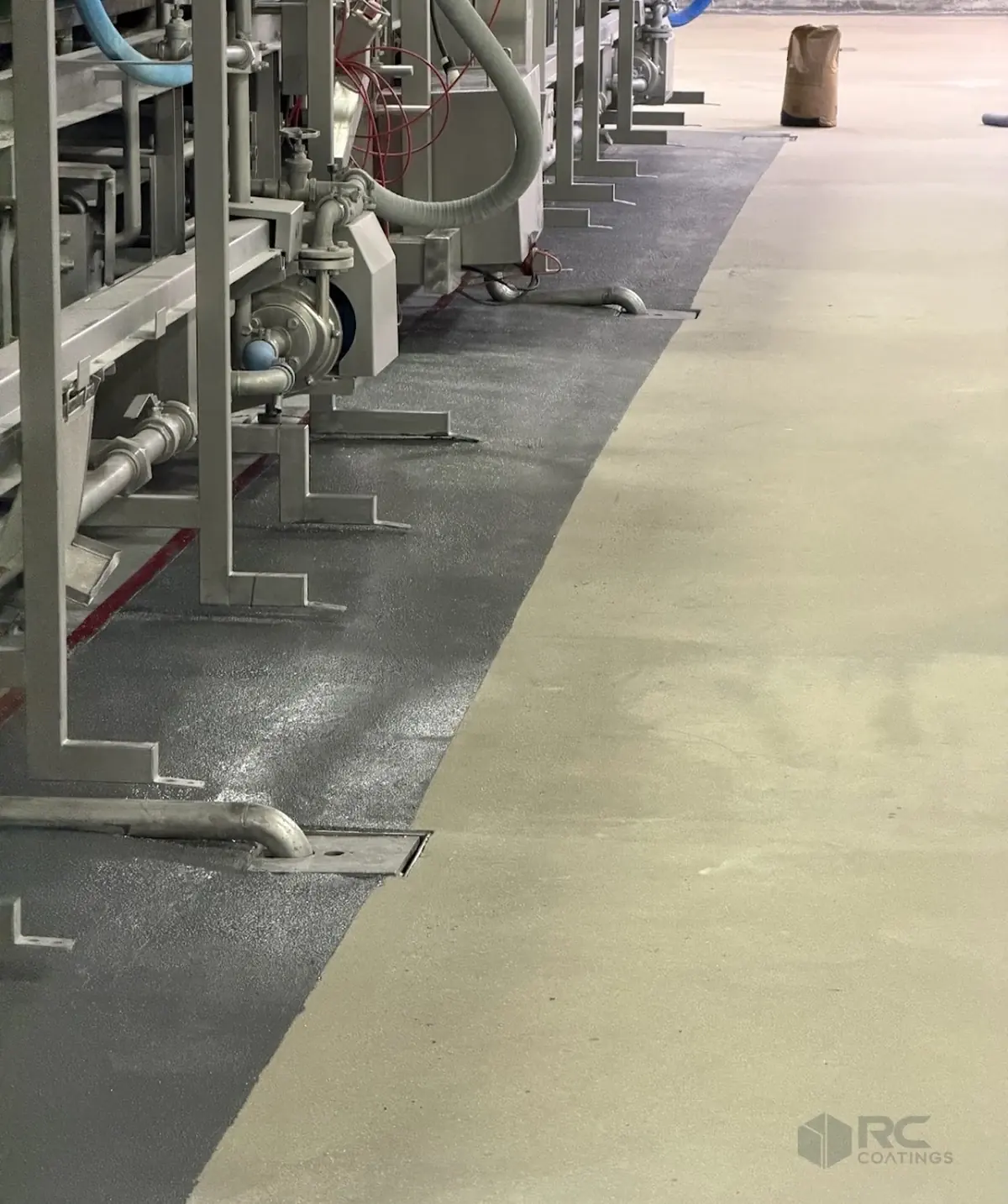
The floor the traffic will actually meet.
- Name the exposure
Heat, wash water, chemicals, and what rolls across the slab.
- Prepare the concrete
The hours nobody photographs. Oil, sugar, and failed coatings have to leave.
- Place the build
Thickness and texture follow the room, including cove where wash water meets the wall.
- Return it to service
A phased protein floor on this site finished in 11 days inside a 16-day window. Your window is its own plan.
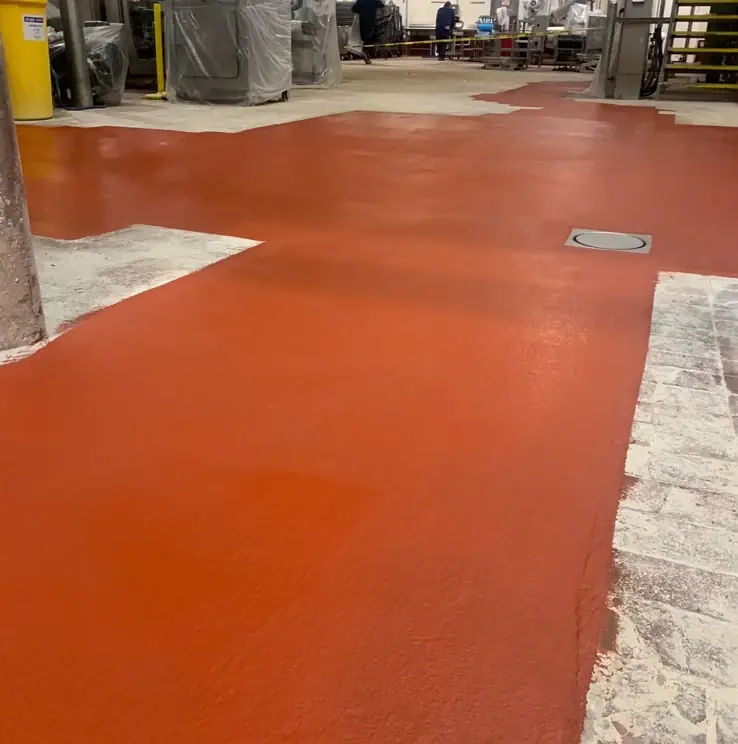
Two published floors, not a catalog.
A protein room and a dairy-brick corridor are the project facts we publish. Customer names and locations stay off the page.
A brittle coating that was fine in a dry aisle often cracks at a freezer door. That doorway is why urethane cement is on the cold storage page.
Floor questions
When is urethane cement the right call?+
When the floor sees thermal shock, constant moisture, aggressive washdown, or all three. A dry warehouse aisle often wants a different resin.
How is it different from epoxy?+
Epoxy is a strong floor in dry or mildly wet rooms. It is more likely to lose bond where the slab goes from hot wash to cold, or where moisture is still moving.
Where do MMA and polyaspartic fit?+
They are fast-cure options when downtime is the limit and the exposure allows them. They are not an automatic substitute in a thermal-shock room. See fast-cure flooring.
What thickness do you install?+
It depends on the room. Published projects include 3/8-inch Poly-Crete MD and one inch of Poly-Crete WR with TF topcoats. We do not publish one thickness for every floor.
Can you install during a shutdown?+
Yes, when preparation and cure fit the window. One published protein floor finished in 11 days. A dairy-brick corridor returned inside a Friday-to-Sunday window. Yours is scheduled from the slab we see.
Do you warrant a specific number of years?+
Not on this page. Any floor warranty is the written one for that system and that project.
Tell us what hits the floor.
Temperature, wash chemistry, and how long the line can stop.
Request a floor assessment