
Commercial roof
repairs + restoration.
Repair the details first. Coat the field only when the roof is dry enough and compatible.
Request a roof assessment
Does your roof need a tear-off?
See how we assess a flat roof, repair the wet areas, and apply a seamless roof coating, and when we tell you a roof really needs replacing.
Read the video transcript
If you manage a commercial or industrial flat roof, you know the routine. A leak shows up, someone patches it, and a few months later, it's back.
Meanwhile, water works into the insulation. Every season you wait, the repair gets bigger, and that replacement quote gets harder to avoid.
But a lot of flat roofs don't need a tear-off. Here's how we approach it.
First, we assess the roof and give you a written report.
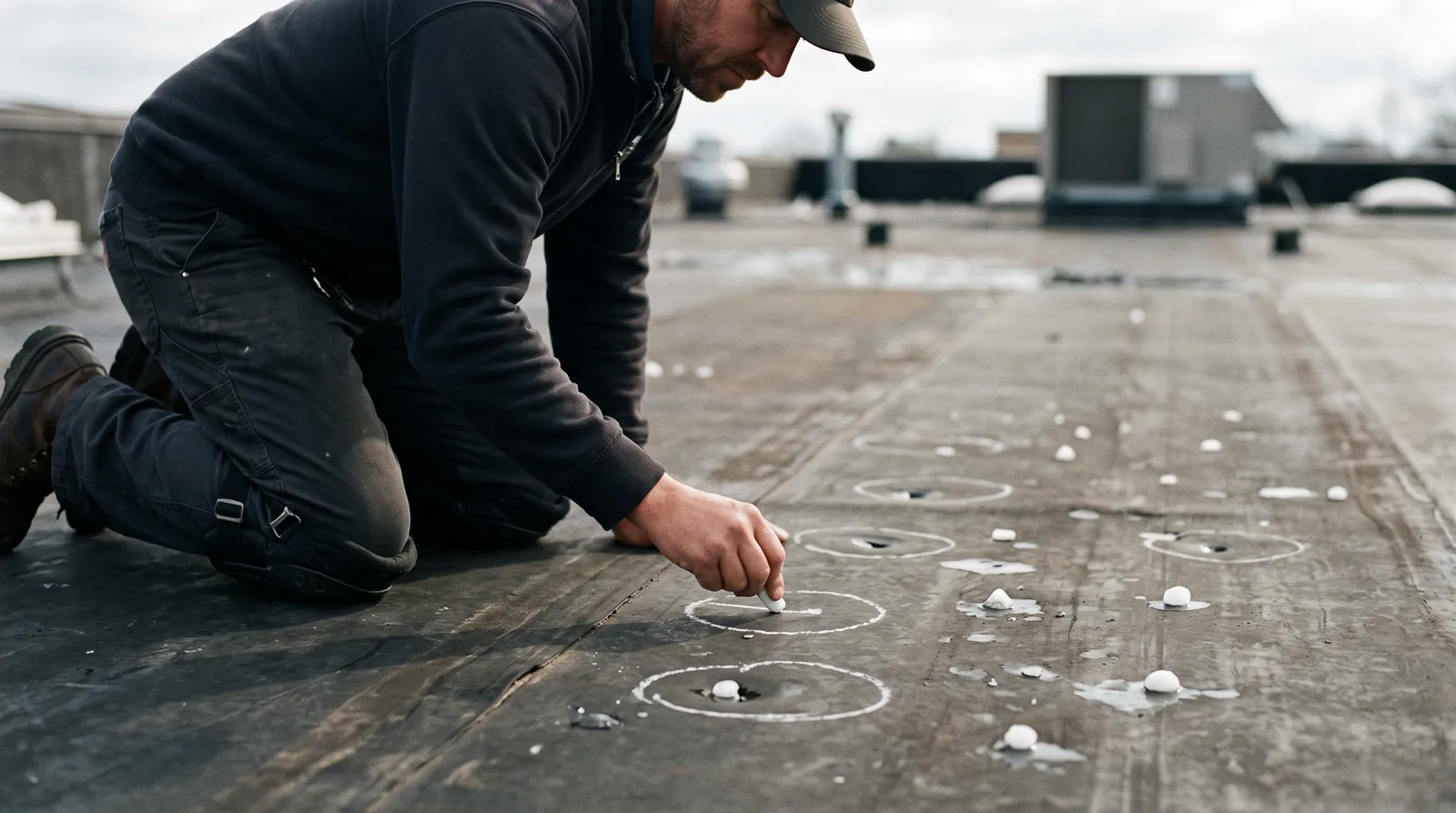
Next, we cut out and repair the wet and damaged areas.
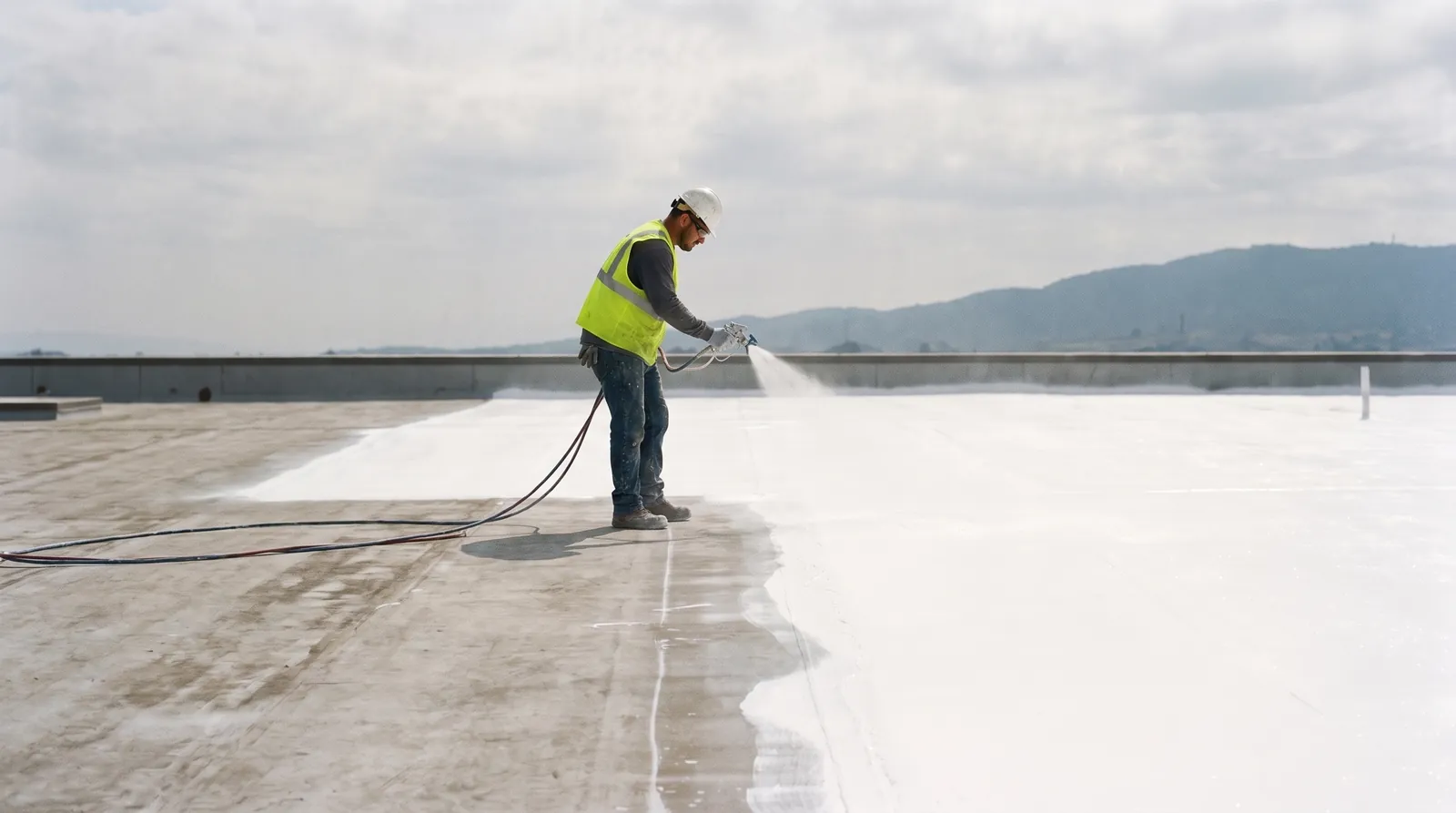
Then we clean the surface and apply a seamless roof coating. It cures into one continuous membrane and seals the seams where many leaks start.
Your existing roof stays in place, so there's less mess and less disruption inside. Eligible projects come with warranty options in writing.
And if your roof really does need replacing, we'll tell you.
Request your free roof assessment with a written report below.
Restoration is a candidate, not a default.
A commercial flat or low-slope roof can often stay in place if wet areas are repaired and the surface will take a coating. Silicone, acrylic, and urethane are the three families we compare. Uniflex, one of the systems RC Coatings installs, offers 10, 15, and 20-year labor and materials warranties, subject to the written warranty terms.
Ponding is a reason to look at silicone, not a reason to coat wet insulation. If the assembly is at the end of its life, you get a restoration or replacement proposal instead. Planning figures are on roof coating cost.
Seams are where single-ply leaks start.
In our field experience, most leaks and problems on TPO and other single-ply roofs start at the seams. We coat over that existing sheet. A seamless roof coating cures as one continuous membrane over the whole roof. That membrane is seamless waterproof roofing, and the seams are gone.
| Question | Silicone | Acrylic | Urethane |
|---|---|---|---|
| Standing water | Compared first when water remains after drainage is improved as far as the building allows. | Wants the roof to drain. | Often a wear coat where people walk, not the ponding specialist. |
| Sun | Stable under UV. | Reflective when it is clean. | An aliphatic top where UV hits a walked roof. |
| Foot traffic | Walk pads at equipment. | Limited traffic. | The usual conversation where the same path is walked. |
| Later recoat | Usually silicone again. | Often acrylic again, after preparation. | Follow the system already on the roof. |
From the walk to the packet.
- Assess
Condition, drainage, moisture, and previous repairs decide whether a coating is even suitable.
- Repair the wet and the open
Wet insulation and failed flashings are fixed before anyone coats the field.
- Install the system
The family follows the roof: silicone where water stands, acrylic where it drains, urethane where people walk.
- Hand over the warranty
The written Uniflex warranty and the Owner's Packet set the length and the upkeep for that roof.
The roof still needs a year.
A coating is not a substitute for drains and visits. The maintenance program is the spring scan, the fall check, and the log the warranty expects.
An active leak is a repair first. Hail is documented on the storm page before anyone talks about a new field coating.
Coating questions
Can you tell if a roof qualifies from an aerial photo?+
An aerial photo helps identify the building. It cannot establish moisture, adhesion, or whether restoration is allowed. That takes a closer assessment.
Will the whole roof need to come off?+
A suitable restoration can keep the existing assembly. Wet or damaged areas can still be removed. The assessment sets that scope.
Can you work while the building is occupied?+
Yes, when we know the production, access, and tenant limits. We plan around those and say what will be disrupted.
When is silicone a better fit than acrylic?+
When water still stands after drainage is improved as far as the building allows. Acrylic is the comparison when the roof drains and reflectivity matters.
Does every Uniflex roof carry the same warranty length?+
No. Uniflex, one of the systems RC Coatings installs, offers 10, 15, and 20-year labor and materials warranties, subject to the written warranty terms. The written warranty and the Owner's Packet set the length for that roof.
Can you coat a roof that holds water?+
Standing water on a dry, sound roof is a drainage and coating choice. Water inside the assembly is repaired, or the roof is ruled out for restoration.
Why does a seamless roof coating stop leaks?+
In our field experience, most leaks and problems on TPO and other single-ply roofs start at the seams. A seamless roof coating cures as one continuous membrane over the whole roof, so those seams are gone. Wet areas and open flashings are still repaired before the field is coated.
How long does a silicone roof coating last?+
It depends on the roof, the coating thickness and the upkeep. Uniflex, one of the systems we install, offers 10, 15 and 20-year labor and materials warranties, subject to the written terms. The length is set per roof in writing, and the Owner's Packet sets the upkeep that keeps it valid.
What are the drawbacks of a silicone roof coating?+
Silicone holds dirt more than acrylic, can be slippery when wet, and once a roof is silicone, future recoats are generally silicone too. It also costs more than acrylic. Where a roof drains well and gets foot traffic, acrylic or urethane may fit better.
Can you recoat over an existing silicone coating?+
Usually, if the existing silicone is well adhered, clean and dry. We clean it, repair failures and run an adhesion test before specifying the recoat, which is normally another silicone.
Do silicone coatings hold up to Utah snow and freeze-thaw?+
Silicone stays flexible through temperature swings and tolerates ponding water. The failure mode is moisture trapped under the coating, so wet insulation is found with a drone thermal scan, confirmed with core samples, and replaced before anything is coated.
How much does a commercial roof coating cost per square foot?+
It depends on the roof's condition, the repairs, the system and access. Our roof coating cost page explains what drives the number, and we price each roof from an on-site assessment. The roof assessment is free.
What is the longest lasting roof coating?+
For flat commercial roofs, silicone and urethane systems applied at the right thickness generally last longest, and the written warranty is the clearest measure. Uniflex, one of the systems we install, offers 10, 15 or 20-year warranty options, set per roof in writing. Thickness, prep and upkeep matter more than the product name.
Tell us what the roof is doing.
Leaks, ponding, or a coating that is chalking are enough to start.
Request a roof assessment