
A short cure is useful only if the floor is the right one.
MMA and polyaspartic exist so a floor can return sooner. They are not a reason to pick the wrong resin.
Request a floor assessment
A short cure is a constraint, not the specification.
Methyl methacrylate and polyaspartic systems are how a commercial or industrial floor gets back into service sooner. Epoxy is often slower and still the right resin. Urethane cement stays the choice for thermal shock and washdown.
We do not install residential garage floors. Odor and ventilation are part of an MMA plan. The hours of blasting and removal usually take more of the shutdown than the resin does.
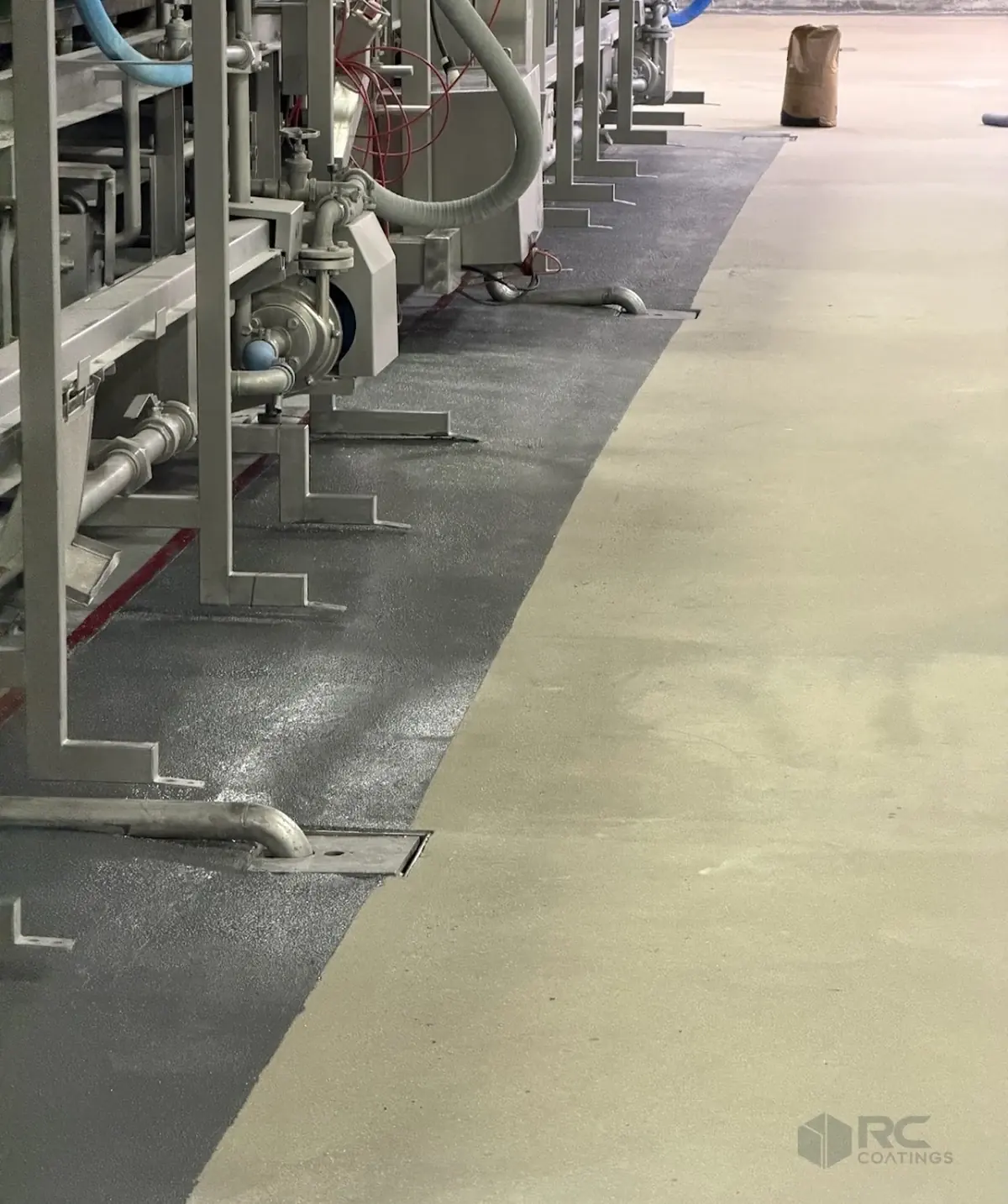
Use the window honestly.
- Name the real limit
A weekend, a holiday, or a line that can be phased.
- Spend the hours on preparation
Oil, sugar, and old mastic do not become a fast-cure problem by wishing.
- Match the resin
MMA or polyaspartic when the exposure allows speed. Urethane cement when heat and wash rule it out.
- Return the room
Phased aisles are often the honest fast-cure project. A full stop is often the honest urethane-cement project.
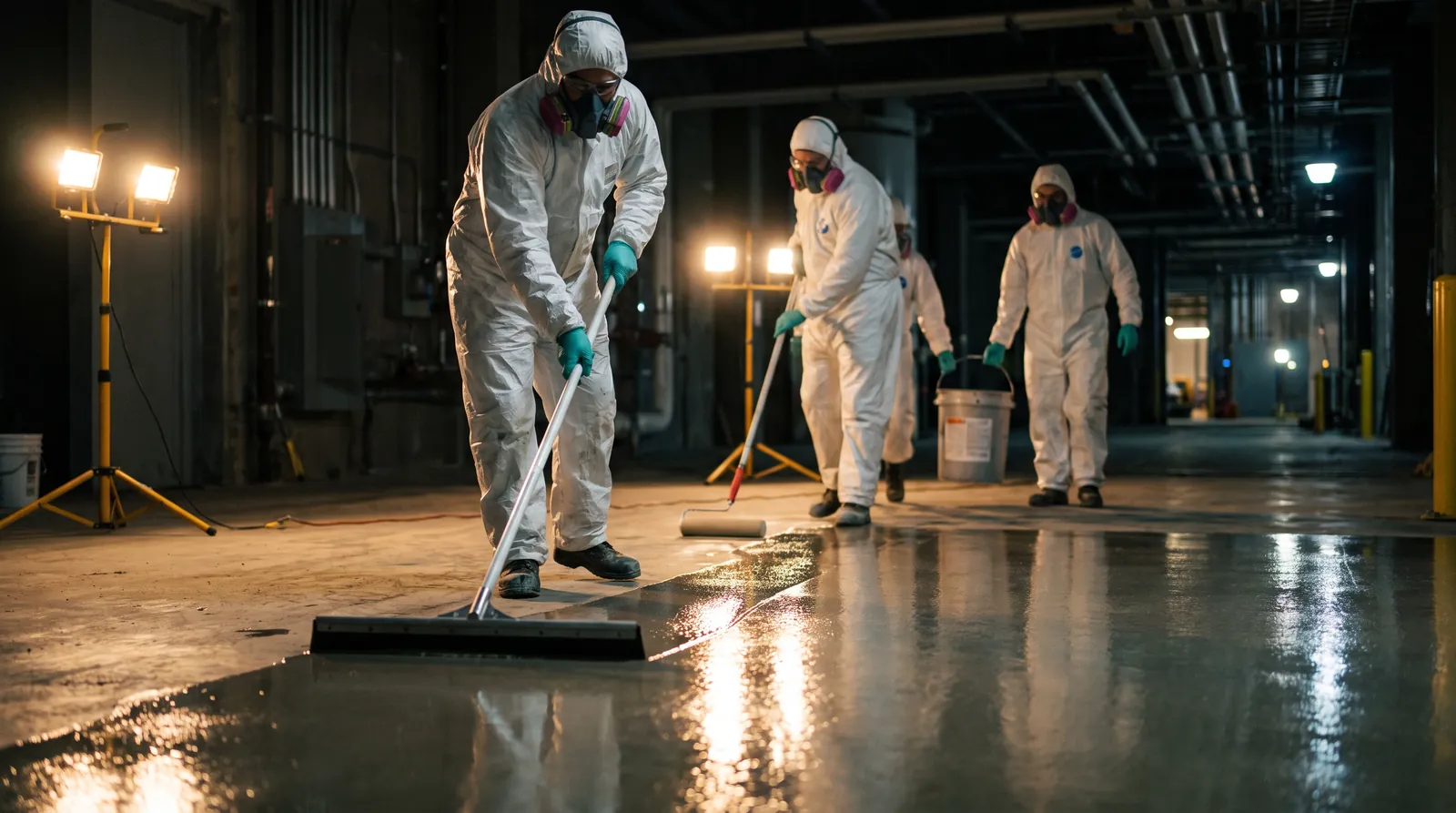
Manufacturing weekends and phased food rooms.
Manufacturing asks for this page most often, because a dry aisle and a short holiday can line up.
A brewery or a washdown room that needs thermal shock should read urethane cement before trading durability for a Monday start.
Fast-cure questions
Is fast-cure the same as a better floor?+
No. It is a shorter return to service. The exposure still picks the resin.
Will MMA work in a hot washdown room?+
Only when that system is rated for it. Thermal shock and constant hot wash still point to urethane cement.
Do you install garage floors?+
No. This is commercial and industrial work.
What should we tell you about the window?+
When the line can stop, whether the aisle can be phased, and what the slab is contaminated with.
Tell us the window and the exposure.
The date the line must run again, and what the floor sees that day.
Request a floor assessment